
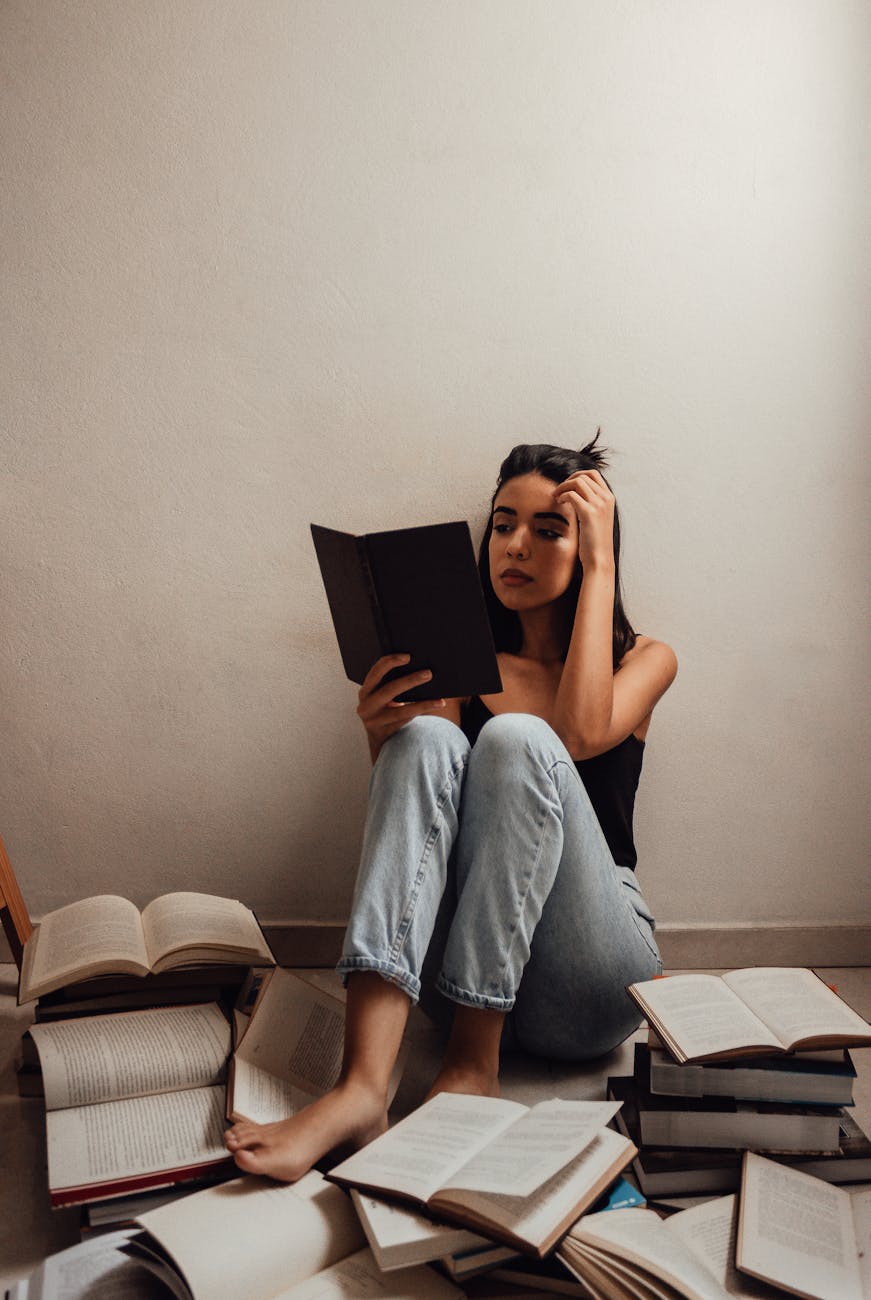
There’s something magical about a book that feels like it was written just for you. You open the first page, and suddenly, you’re not alone—your thoughts, your questions, even your doubts find a mirror in the words of someone who might have lived decades or centuries before you. Books are more than entertainment. For women especially, they’ve always been a way of reclaiming space, telling stories that weren’t meant to be told, and daring to imagine a different kind of future.
When we talk about the books every woman should read in her lifetime, we’re not talking about a rigid checklist or a “literary bucket list.” This isn’t about reading to impress others. It’s about discovering the stories that expand our hearts, challenge our minds, and remind us of our worth. Every woman deserves to find herself in the pages of a book—sometimes as the heroine, sometimes as the rebel, and sometimes as the quiet observer who learns to see the world differently.
Think about novels like Charlotte Brontë’s Jane Eyre—a story that taught generations of women that independence doesn’t mean living without love, but rather knowing that your voice and your choices matter just as much as anyone else’s. Or Chimamanda Ngozi Adichie’s We Should All Be Feminists, which isn’t just a call to arms but a reminder that feminism is about everyday choices, equality, and the freedom to be fully yourself. These books are worlds apart in time and style, but they both whisper the same truth: women’s lives are complex, layered, and worth writing about.

The beauty of reading is that it allows you to time-travel through women’s experiences across centuries and cultures. Take Toni Morrison’s Beloved, for example. It doesn’t just tell a story; it shakes you awake, demanding you sit with the pain, resilience, and dignity of Black women who endured the unendurable. It’s not an easy read—but then again, the stories that matter most rarely are. And when you finish it, you don’t just close the book—you carry it with you.
And then there are the books that feel like secret companions in the quiet corners of your life. Virginia Woolf’s A Room of One’s Own, with its iconic call for women to claim space—literal and metaphorical—remains as relevant today as it was nearly a century ago. It’s the kind of book you return to at different stages of life, each time finding something new. When you’re young, it feels like a manifesto; when you’re older, it feels like a conversation with a friend who knows the struggles of carving out a life for yourself.
Of course, not every book has to be heavy or political to be essential. Some remind us that joy, romance, and imagination are just as important in shaping women’s lives. Jane Austen’s Pride and Prejudice may be dressed in witty banter and love stories, but beneath it lies a sharp critique of gender, class, and the expectations placed on women. It’s proof that humor and social commentary can live hand in hand. And then there’s Elizabeth Gilbert’s Eat, Pray, Love—sometimes dismissed as “light reading,” yet for countless women, it’s been the spark that led them to question what happiness really looks like. Sometimes, a book doesn’t need to be a masterpiece to change your life—it just needs to reach you at the right moment.

In a world that often tells women how to act, what to want, and when to settle, books provide an antidote. They remind us of the power of asking questions. They show us that there isn’t only one way to be a woman—there are endless ways. A novel like Margaret Atwood’s The Handmaid’s Tale doesn’t just paint a dystopian world; it dares us to think about control, autonomy, and freedom in our own reality. On the other end of the spectrum, Louisa May Alcott’s Little Women gives us sisters who dream differently yet love fiercely, proving that ambition and tenderness can live side by side.
But perhaps the most important part of all this isn’t the titles themselves—it’s the act of reading them. When women read women, we connect across generations. We learn that the struggles of one century echo into the next, and that the victories—big and small—build on each other. We find solidarity in the fact that someone, somewhere, has felt what we’re feeling. Books aren’t just stories; they’re blueprints, warnings, love letters, and survival guides all at once.
So, if you’re wondering where to start, don’t think of it as a list you have to conquer. Think of it as an invitation. Pick up the books that call to you in this season of your life. Maybe it’s a classic, maybe it’s a bold modern novel, maybe it’s a memoir that makes you cry on the subway because it feels so close to home. What matters is that you let these voices into your life. Because every woman deserves to know that her story belongs not just to her, but to a much larger, ongoing conversation.
The truth is, no single list could ever capture all the books women “should” read. But the ones that leave a mark are the ones that remind us of who we are—and who we might become. Whether it’s a novel that makes you laugh, an essay that makes you angry, or a memoir that makes you whisper “me too” into the pages, each book is part of the journey. And perhaps that’s the real power of reading: it doesn’t just tell us who women have been, but also gives us permission to write, live, and rewrite our own stories.
So, maybe the best advice isn’t to follow someone else’s reading list, but to build your own. One book at a time, one story at a time. Because in the end, the books every woman should read in her lifetime are the ones that make her feel fully, unapologetically alive.




Deja un comentario